
Innovative Solutions for Municipal Waste Management
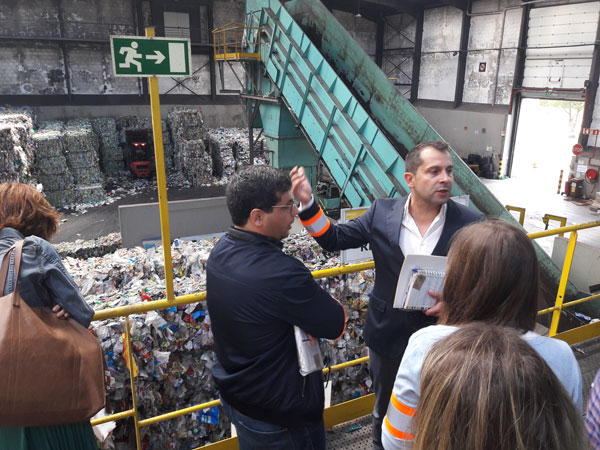
In partnership with Ferrovial Servicios and Lipor (Intermunicipal Waste Management of Greater Porto), organized the workshop: “Innovative Solutions for Municipal Waste Management” at the Lipor facilities, within “ZRR for municipal waste” framework.
During the meeting, that it was attended by more than 20 participants from public and private companies, the presentation of “ZRR for municipal waste” project was made by Elisabet Gonzalez, Head of Innovation in the Department of Innovation and Development of the Center for Environmental Competence of Ferrovial Servicios. This project aims to achieve the principles of the circular economy through the introduction of an artificial intelligence robot in a municipal solid waste treatment plant, to better separate urban waste that can be reused or recycled more selectively, reducing need for newly manufactured materials and the pollution associated with them.
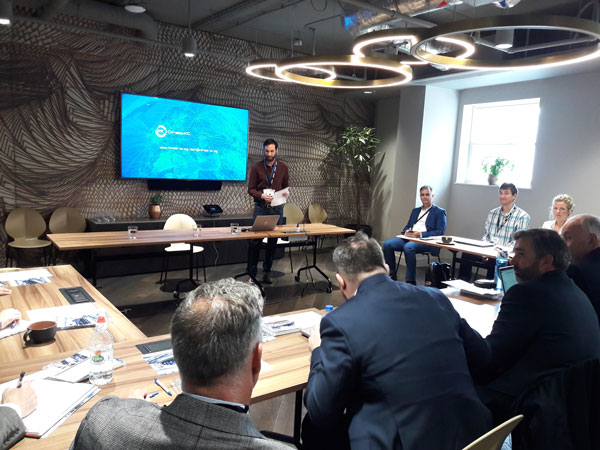
This “ZRR for municipal waste” project was debated in the round table “Status of the robotics in waste Management plants”, whose moderation was in charge of Jaume Cabre (Innovation Director of the Environmental Competence Center of Ferrovial Servicios), and which included the participation of Luísa Magalhães (General Manager of Smart Waste Portugal), Vicente Galván (Director of the Center for Environmental Competence of Ferrovial Services), Pedro Sousa, Head of Ferrovial Serviços for the management of the Triage Center of Lipor, and Helder Filipe (Technician of the Logistics and Infrastructure Division of Lipor). In this debate it was possible to know the opinion of experts from different public and private companies in the waste sector that helped to understand the role and condition of innovation in waste management in Portugal.
Then the workshop dynamic started by dividing the attendees in 3 different working groups, who solved 3 challenges related to waste management:
Group 1: How do we design a new facility to improve waste sorting?
Group 2: Industry 4.0: We have to digitize our process in the treatment plants and this generates a Big data flow. How do we obtain the data of the processes we want to digitize?
Group 3: How can robotics / AI improve the safety of workers? (Zero accidents).
The workshop ended with the visit to the Multimaterial Valorization waste Plant of Lipor.